Monday, February 28, 2011

New Digital Collection: Africa Through a Lens

Africa Through a Lens (National Archives, UK) includes thousands of images taken from a collection of Foreign and Commonwealth Office photographs.


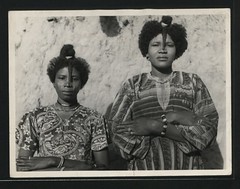
Kanuri Women of Dikwa Emirate. 1955 Report

The collection covers over 20 African countries from the 1860s to the 1980s. The site also includes podcasts (accompanied by images from the collection) that cover the origin of the collection and the aims of the digital project; focus on photos of Nigeria; and conserving the images in the collection.

Sunday, February 27, 2011

New National Archives (U.S.) Video Short: Madam C.J. Walker

Video Short: Madam C.J. Walker (3 min. 29 sec)

In this "Inside the Vault" video short, A'Lelia Bundles (Walker's great-great granddaughter) tells how she pieced together details of Walker's early life from National Archives records.

Preview Bundles' On Her Own Ground: The Life and Times of Madam C.J. Walker (Simon and Schuster, 2002), on Google Books. Bundles discussed the book as part of a panel on Life as We Write It at the Virginia Festival of the Book in 2002. The Madam C. J. Walker Collection [Indiana Historical Society] includes digital images of Walker, advertisements, and examples of hairstyles. 

Saturday, February 26, 2011

Mary Lou Williams: "Jazz for the Soul"

A recent issue of Smithsonian Folkways Magazine (Fall 2010) features Mary Lou Williams: Jazz for the Soul, an article by Father Peter O'Brien, S. J. The article includes photographs of Williams and audio samples of her music. 

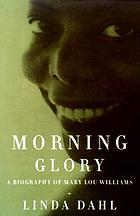
Jazz Profiles from NPR: Mary Lou Williams 1910-1981 includes excerpts from interviews with Williams and others. NPR also offers Mary Lou Williams: A Centennial Celebration (6 min 54 sec).  For additional biographical information, see Linda Dahl's Morning Glory: A Biography of Mary Lou Williams (Pantheon Books, 1999) and Tammy Kernodle's  Soul on Soul: The Life and Music of Mary Lou Williams (Northeastern University Press, 2004). 

Thursday, February 24, 2011

New Exhibition: Dorothea Lange’s "Three Mormon Towns"

Dorothea Lange's "Three Mormon Towns," Brigham Young University Museum of Art, January 20 - April 30, 2011

In 1953, Dorothea Lange and Ansel Adams spent three weeks taking photographs in three southern Utah communities: Gunlock, St. George, and Toquerville. About 35 of these photographs were published in  the Life magazine article, Three Mormon Towns  (available online in Google Books).

Curator Diana Turnbow selected 62 photographs for "Dorothea Lange’s ‘Three Mormon Towns.'"  The website for the exhibit includes Turnbow's essay, "From Guggenheim Fellowship to Life Magazine: Dorothea Lange's Lasting Impression of Southern Utah;" Lange's initial layout for the article;  the original Life article; a brief video interview with Lange's son, Dan Dixon; and the photographs from the exhibit (see "Exhibition Checklist").


Linda Gordon's Dorothea Lange: A Life Beyond Limits (Norton, 2009) offers additional background about "Three Mormon Towns" (pages 367-369), including how the project strained the relationship between Lange and Adams. Gordon discusses Lange's life and photographs in a National Public Radio interview: Dorothea Lange: Drawing Beauty Out of Isolation (7 min, 48 sec).

Tuesday, February 22, 2011

Women's History in Visual Arts Journals

Taylor & Francis is offering free access to its visual arts journals until the end of February. Several of these journals regularly include articles that feature primary sources. For instance, see these recent articles from History of Photography: "Splendid Calotypes" and "Hideous Men": Photography in the Diaries of Lady Pauline Trevelya, by Larry J. Schaaf; Impreciseness in Julia Margaret Cameron's Portrait Photographs, by Mirjam Brusius; and Exposing the Zenana: Maharaja Sawai Ram Singh II's Photographs of Women in Purdah, by Laura Weinstein.

Searching the collection will also bring up numerous relevant articles from Visual Anthropology, such as 'The Eyes of Our Ancestors Have a Message": Studio Photographs of Fort Sumner, New Mexico, 1866, by Maureen T. Schwarz;  Men, Women, and "Japanese" as Outsiders: A Case Study of Postcards with Ainu Images, by Sidney C. H. Cheung; and Picturing Women, Class and Community in Arab Detroit: The Strange Case of Eva Habib, by Sally Howell. 

Friday, February 18, 2011

ARTstor Subject Guide :: Women's Studies


ARTstor, a non-profit digital library of more than one million images for education and scholarship, provides subject guides on a range of topics. Its Women’s Studies handout highlights content related to the history and depiction of women across world cultures and includes search tips, suggested search terms, and featured collections.


A search for “feminist” in ARTstor turns up 295 results ranging from photographs of the Women’s Rights Movement in the U.S. to stills from Chantal Ackerman’s 1976 film Jeanne Dielman.


ARTstor also works directly with women artists and their estates to present extensive documentation of artists’ oeuvre. Its partnership with the Georgia O’Keeffe Museum has resulted in a collection of approximately 1,200 images of works by Georgia O’Keeffe (1887-1986). The images in the collection present the entire range of O’Keeffe’s oeuvre, from the artist’s iconic flowers and bleached desert skulls to nudes, landscapes, cityscapes, still lifes, as well as her highly innovative abstractions.


Collaboration with the Metropolitan Museum of Art has resulted in approximately 5,800 images of American and European costumes and accessories which were formerly in the Brooklyn Museum. The Brooklyn Museum Costume collection was established in 1902 and is the world’s most comprehensive collection of American fashion from the late 19th to mid-20th century. Highlights of the collection include the definitive collected works of costumes and patterns by Charles James, the British-born designer who was a major force in New York fashion in the 1940s and 1950s, as well as many examples of Belle Époque fashion.


ARTstor is currently collaborating with Judy Chicago to share a collection that will consist of images depicting The Dinner Party (1974-1979), along with individual works and other collaborative projects from throughout Chicago’s career, such as the Birth Project (1980-1985), Powerplay (1982-1987), and recent works in glass. Chicago (b.1939), an artist, author, feminist, and educator whose career spans four decades, helped to initiate a worldwide feminist art movement. Her most well-known work, The Dinner Party, is an icon of feminist art and was executed with the participation of hundreds of volunteers.
Tuesday, February 15, 2011

Now Available: Vera Glaser papers

The American Heritage Center at the University of Wyoming has recently processed and digitized select folders from the Vera Glaser papers. Glaser was a long-time Washington D.C. reporter and an advocate for women’s rights. During President Richard Nixon’s second press conference, Glaser helped spark a remarkable chain of events when she asked Nixon, “Mr. President, since you’ve been inaugurated, you have made approximately two-hundred presidential appointments, and only three of them have gone to women. Can we expect some more equitable recognition of women’s abilities, or are we going to remain the lost sex?”

The question helped lead to the first systemic program to recruit women into federal positions, as well as the creation of the President's Task Force on Women's Rights and Responsibilities, a task force that Glaser proudly served on. The task force produced a report that consisted of twenty suggestions for improving the status of women in America. After the White House initially refused to release the report, Glaser passed on the task force findings to a fellow journalist for publication. Ultimately, nineteen of the twenty report recommendations became law, with only the Equal Rights Amendment failing to be adopted by the government.

The majority of the Vera Glaser papers consist of materials relating to her career as a journalist, including research files and published articles on American politics and women’s issues from the 1940s through the 1990s. Additionally there are a number of significant professional files, including files related to her work for Sen. Charles Potter and Sen. Kenneth Keating, the Republican National Committee, presidential committees, and various women's and journalistic organizations. The current digital collection consists of a file on the President's Task Force on Women's Rights and Responsibilities, speeches, photographs, and an oral history.