Jennie Wilde (1865-1913) designed floats for many New Orleans Mardi Gras parades. Mistick Krewe of Comus 1910 float designs features 20 of Wilde's colorful and detailed designs. Google Books Preview includes the chapter on Jennie Wilde in Henri Schindler's Mardi Gras Treasures: Float Designs of the Golden Age (Pelican Pub. Co., 2001).
Showing posts with label Digital collections. Show all posts
Showing posts with label Digital collections. Show all posts
Friday, September 30, 2011

Monday, May 30, 2011
Black Gospel Music and the Civil Rights Movement
More than 75% of the gospel vinyl released between 1940 and 1970, the “Golden Age of Gospel Music,” is unavailable in any format. The Black Gospel Music Restoration Project at Baylor University in Waco, Texas, seeks to preserve the remaining African American gospel recordings from this period and to create the definitive online encyclopedia of gospel music. Many of the recordings preserved by the BGMRP were either recorded live at local radio stations, or were produced by small, obscure producers now out of business or bought up by larger recording labels. Working with other universities and private collectors, the BGMRP has digitized, scanned, and cataloged more than 2500 previously unavailable 78s, 45s, and LPs, making the BGMRP the largest single repository of black gospel music.
The BGMRP grew out of the research of Baylor University professor Robert Darden, author of People Get Ready: A New History of Black Gospel Music (Continum 2004). In working on People Get Ready, Darden learned that much of the music from gospel’s golden age was missing. Darden, a lifelong gospel music enthusiast, was writing about music he had never heard. In 2005, Darden wrote an op-ed piece for The New York Times, “Gospel’s Got the Blues” (February 15, 2005). New York businessman Charles Royce read Darden’s editorial and offered to fund a digitization project. The BGMRP is physically housed in the Ray I. Riley Digitization Center at Moody Memorial Library on the Baylor University campus in Waco. Because of copyright restrictions, off-campus online access to the collection is currently limited to 30-second samples of the music. A select group of music clips are also available through Baylor University’s iTunes U.
The BGMRP preserves the music of an era when gospel music and civil rights were, as Darden notes, “indelibly linked.” Gospel music provided an important accompaniment to the sit-ins, marches, and voter registration drives of the Civil Rights Movement. The movement’s most significant song “We Shall Overcome” was reworked in part from an old Baptist hymn. The album Freedom Highway recorded by the Staple Singers, featuring Mavis Staples, was inspired by Dr. Martin Luther King’s march from Selma to Montgomery, Alabama, and dedicated to the freedom marchers.
Other resources:
Goodrich, Terry. "Researcher Finds Civil Rights Songs on Flip Side of Gospel Records." Associated Baptist Press, February 3, 2011.
"Gospel Music Historian Robert Darden." Fresh Air, National Public Radio (air date: December 20, 2007).
Norris, Michelle. "A History of Gospel Music." All Things Considered, National Public Radio (air date: December 17, 2004).
Friday, April 8, 2011
New Digital Collection: Charlotte Perkins Gilman Papers
 The Schlesinger Library is the primary repository for the papers of early 20th-century American feminist Charlotte Perkins Gilman (1860–1935). To celebrate the sesquicentennial of Gilman's birth, the Schlesinger Library has digitized Gilman's papers, with the generous help of the Cynthia Green Colin Fund.
In September 2010, the Nation named Gilman among the “Fifty Most Influential Progressives of the 20th Century,” taking note of her arguments that women would be emancipated only when they were economically independent and that housekeeping and child care should be professionalized. Known around the world during her lifetime as a public intellectual, author of the best-selling Women and Economics (1898), and a major influence on the women’s movement, today Gilman is known primarily for The Yellow Wallpaper, an autobiographical short story about a woman’s nervous breakdown.
To learn more about Gilman's life and to access her diaries, letters, writings, and drawings, consult the online finding aid
Sunday, March 27, 2011
Digital Collection: Betty Parsons Gallery Records and Personal Papers
The Archives of American Art blog is highlighting women who have contributed to the development and understanding of contemporary and modernist art in the United States. The first entry features Betty Parsons (1900-1982), who opened the Betty Parsons Gallery in New York City in 1946. A photograph of Parsons and a letter from Peggy Guggenheim provide just a hint of the 61,000 images that are available online in the Betty Parsons Gallery Records and Personal Papers. See More About the Collection for a biographical profile of Parsons. The Archives of American Art site also includes the transcript of an oral history interview with Parsons (1981). Access additional digital collections, oral history interviews, and collections by topic (e.g., Women) on the Research Collections page.
Friday, February 18, 2011
ARTstor Subject Guide :: Women's Studies

ARTstor, a non-profit digital library of more than one million images for education and scholarship, provides subject guides on a range of topics. Its Women’s Studies handout highlights content related to the history and depiction of women across world cultures and includes search tips, suggested search terms, and featured collections.
A search for “feminist” in ARTstor turns up 295 results ranging from photographs of the Women’s Rights Movement in the U.S. to stills from Chantal Ackerman’s 1976 film Jeanne Dielman.

ARTstor also works directly with women artists and their estates to present extensive documentation of artists’ oeuvre. Its partnership with the Georgia O’Keeffe Museum has resulted in a collection of approximately 1,200 images of works by Georgia O’Keeffe (1887-1986). The images in the collection present the entire range of O’Keeffe’s oeuvre, from the artist’s iconic flowers and bleached desert skulls to nudes, landscapes, cityscapes, still lifes, as well as her highly innovative abstractions.

Collaboration with the Metropolitan Museum of Art has resulted in approximately 5,800 images of American and European costumes and accessories which were formerly in the Brooklyn Museum. The Brooklyn Museum Costume collection was established in 1902 and is the world’s most comprehensive collection of American fashion from the late 19th to mid-20th century. Highlights of the collection include the definitive collected works of costumes and patterns by Charles James, the British-born designer who was a major force in New York fashion in the 1940s and 1950s, as well as many examples of Belle Époque fashion.
AR Tstor is currently collaborating with Judy Chicago to share a collection that will consist of images depicting The Dinner Party (1974-1979), along with individual works and other collaborative projects from throughout Chicago’s career, such as the Birth Project (1980-1985), Powerplay (1982-1987), and recent works in glass. Chicago (b.1939), an artist, author, feminist, and educator whose career spans four decades, helped to initiate a worldwide feminist art movement. Her most well-known work, The Dinner Party, is an icon of feminist art and was executed with the participation of hundreds of volunteers.
Wednesday, September 29, 2010
Scrapbooks: Examples from digital collections, books, and a presentation
Gladys Ewing Debutante Scrapbook (University of Houston Digital Library) is a new digital collection that includes invitations, notes, dance cards, and other items from 1911. Discovering American Women's History Online provides links to 19 additional digital collections with scrapbooks.
Two recent books provide historical overviews and specific examples of American scrapbooks:
 Tucker, Susan, Katherine Ott, and Patricia Buckler. The Scrapbook in American Life. Philadelphia, PA: Temple University Press, 2006. Link: WorldCat record with Google Books preview
In addition to an introduction to the history of scrapbooks, the 15 chapters in this book cover such topics as Willa Cather's childhood scrapbook and "Daily Life on South Carolina Plantation: A Scrapbook Memory of Three Generations of Women."
 Helfand, Jessica. Scrapbooks: An American History. New Haven: Yale University Press, 2008. Link: WorldCat record
This volume includes color photographs of the pages from more than 200 scrapbooks.
Helfand and Rebecca Johnson Melvin discuss Scrapbooks and Self Works in a presentation at the Cooper-Hewitt Museum (YouTube, 1 hour, 38 min). Helfand includes examples from her book to illustrate the different ways in which women (and men) have used scrapbooks. After noting that scrapbooks are often overlooked as a research source, manuscripts librarian Rebecca Johnson Melvin describes numerous scrapbooks in Special Collections at the University of Delaware Library. Some of these scrapbooks are also featured in the Self Works exhibit that she curated.
Two recent books provide historical overviews and specific examples of American scrapbooks:
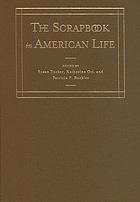
In addition to an introduction to the history of scrapbooks, the 15 chapters in this book cover such topics as Willa Cather's childhood scrapbook and "Daily Life on South Carolina Plantation: A Scrapbook Memory of Three Generations of Women."

This volume includes color photographs of the pages from more than 200 scrapbooks.
Helfand and Rebecca Johnson Melvin discuss Scrapbooks and Self Works in a presentation at the Cooper-Hewitt Museum (YouTube, 1 hour, 38 min). Helfand includes examples from her book to illustrate the different ways in which women (and men) have used scrapbooks. After noting that scrapbooks are often overlooked as a research source, manuscripts librarian Rebecca Johnson Melvin describes numerous scrapbooks in Special Collections at the University of Delaware Library. Some of these scrapbooks are also featured in the Self Works exhibit that she curated.
Monday, September 13, 2010
Pioneering Woman Directors (National Film Preservation Foundation)
Pioneering Woman Directors
This web exhibition from NFPF's Treasures from American Film Archives DVD showcases work by five women filmmakers:
This web exhibition from NFPF's Treasures from American Film Archives DVD showcases work by five women filmmakers:
- Falling Leaves (1912) Preserved by the Library of Congress
- The Hazards of Helen: Episode 13 (1915) Preserved by the Library of Congress
- Peyote Queen (1965) Preserved by Anthology Film Archives
- Rural Life in Maine (ca. 1930) Preserved by Northeast Historic Film
- Where Are My Children? (1916) Preserved by the Library of Congress
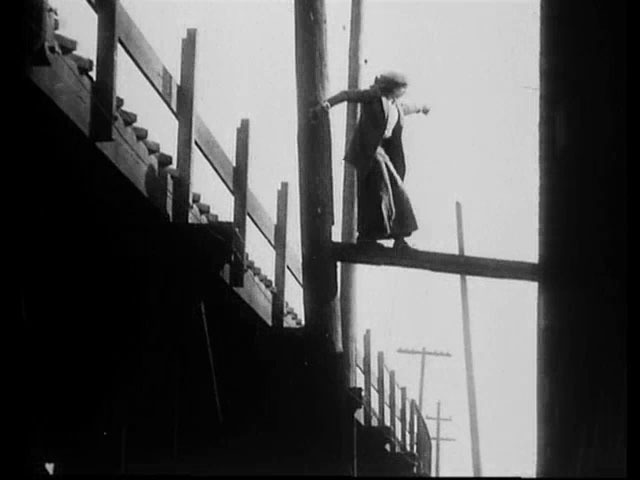 |
| The Hazards of Helen: Episode 13 (1915), directed by Helen Holmes and Leo Maloney. |
Sunday, September 5, 2010
Quakers and Slavery
The Religious Society of Friends (Quakers) led and sustained the abolitionist movement in Britain and North America, particularly after the Quaker reformation of the eighteenth century. Quaker women provided vital leadership in many of the female anti-slavery societies established in the nineteenth century. For example, Hicksite Quakers Lucretia Mott, Esther Moore, and Lydia White were among the founding members of the Philadelphia Female Anti-Slavery Society in 1833. Historians cite the PFASS as being in the vanguard of the abolitionist movement both for its activism and for its integrated membership.
In November 2010, Swarthmore and Haverford Colleges will join with the McNeil Center of Early American Studies at the University of Pennsylvania to host an international conference on Quakers and Slavery. To support the conference, the Quaker repositories at Swarthmore and Haverford have digitized numerous primary source materials, which are available through Triptych, a searchable online database of special collections from Swarthmore and Haverford as well as Bryn Mawr. Project staff have also developed Quakers and Slavery an online exhibit featuring links to the primary source materials in Triptych as well as commentary by established scholars, Quaker researchers, and project staff. Divided into three helpful categories — Themes, People, and Organizations — the commentary enhances users’ understanding of the primary source materials available through the project.
Several sections focus on the history of Quaker women in the anti-slavery movement:
 Radical Quaker Women and the Early Women’s Rights Movement
Learn about radical Quaker women by exploring their role abolition in Pennsylvania and the early Women’s rights movement. Topics discussed include the American Anti-Slavery Society, rural Quaker women, and the first Women’s Rights Convention held at Seneca Falls, New York, 1848.
Rescue of Jane Johnson
In 1855, the slave Jane Johnson and her two children travelled through Philadelphia with their master, John Hill Wheeler. Johnson sent a message to the Pennsylvania Anti-Slavery Society that she wished to escape, and on July 18, Passmore Williamson, William Still, and five other free blacks confronted Wheeler and escorted Johnson and her children to freedom. The event was one of the first challenges to the 1850 Fugitive Slave Law. Passmore Williamson, William Still and the other free blacks were charged for their role in Johnson's 'abduction;' Lucretia and James Mott sheltered Johnson during the trial so that she could testify on her rescuers' behalf.
Biographical entries include a relationship map, which traces relationships among various Quaker supporters of abolitionism including:
Ruth Dugdale and Sarah B. Dugdale
Ruth Dugdale (1801-1896) rivaled her husband, Joseph, in her zeal for reform causes. She was a respected Quaker minister, and participated actively in anti-slavery, temperance, women's rights, and other movements in Ohio, Pennsylvania, and Iowa.
Sarah B. Dugdale (1787-1880) was the mother of Joseph A. Dugdale and the progenitor of his liberal ideals. She was involved in the American Anti-Slavery Society nearly from its founding, continued to participate in Progressive Friends societies and other reform movements until her death in 1880.
 Lucretia Mott
Lucretia Coffin Mott (1793-1880)was a prominent Philadelphia Quaker minister and a leader in reform movements, especially antislavery, education, peace, and women's rights.
The site also includes important resources such as a glossary of Quaker terminology (many with links to primary sources explaining those terms), an interactive map, and a timeline of the anti-slavery movement.
Images from Quakers and Slavery.
Wednesday, August 4, 2010
New Digital Collection: Gottlieb Jazz Photos
Gottlieb Jazz Photos
This Library of Congress collection of 200 photographs (now in the public domain) on Flickr documents the jazz scene in New York City and Washington, D.C. from 1938 to 1948. More photos will be added each month until all 1,600 in the collection are in Flickr. Browse the collection for photos of Mildred Bailey, Ella Fitzgerald, Billie Holiday, Lena Horne, Sarah Vaughan, and Mary Lou Williams.
 |
| William P. Gottlieb's photos of Billie Holiday, Ella Fitzgerald, and Mary Lou Williams. |
Thursday, July 29, 2010
Catt Collection of Suffrage Photographs
 Suffragist, feminist, and political activist, Carrie Chapman Catt (1859-1947) served as president of the National American Woman Suffrage Association. She founded the International Woman Suffrage Alliance in 1902 and the League of Women Voters in 1920. During World War II, Catt supported Allied Forces and worked against Nazi persecution of the Jews.
Six photograph albums from the Carrie Chapman Catt Papers have been digitized and made available online through through Triptych Tri-College Digital Library, a digital initiative of Bryn Mawr, Swarthmore, and Haverford Colleges. The albums are housed with the rest of the Catt Papers in Special Collections at Bryn Mawr College Library. The albums were most likely assembled by Catt's assistant Alda Wilson. The 815 photographs included in the albums cover the period from c. 1840 through 1940 and document the international suffrage movement. Photographic subjects include parades and other events as well as individuals involved in the American and international suffrage movements.

(Images are from the Catt Collection, Bryn Mawr College Library.)
Thursday, July 22, 2010
New Commercial Digital Collection: Feminism in Cuba, 1898-1958
Feminism in Cuba, 1898-1958 includes more than 14,000 pages from the personal collection of Dr. K. Lynn Stoner. The documents in this collection, 95% of which are in Spanish, fall into three categories:
 Stoner used many of the sources in the collection for her book, From the House to the Streets: The Cuban Women's Movement for Legal Reform, 1898-1940 (Duke University Press, 1991).
WorldCat Record (with Google Preview)
- Works by feminists (memoirs of feminist congresses, collections of essays by feminists, journals published by feminist organizations, and published speeches and radio broadcasts)
- Works by men on the status of women
- Literary works by feminist writers that illustrate or discuss the condition of women.

WorldCat Record (with Google Preview)
Wednesday, June 30, 2010

The Samuel J. May Anti-Slavery Collection at Cornell University includes more than 10,000 titles collected by May to document the abolitionist struggle. The pamphlets and other materials included in the May Collection are rare because of their generally ephemeral nature. The collection can be browsed by title, author, or date. A full-text search is also available.
For historians of women abolitionists, the collection includes important works documenting the experience of British and American women abolitionists. For example, the collection includes British Quaker abolitionist Elizabeth Heyrick’s Immediate Not Gradual Abolition; the proceedings for the Anti-Slavery Convention of American Women (1837, 1838, and 1839); Angelina Grimke’s Appeal to the Christian Women of the South; and reports from the Philadelphia Female Anti-Slavery Society, the Ladies’ New-York City Anti-Slavery Society, and the Boston Female Anti-Slavery Society. The collection also includes Civil War and post-war era materials. Of particular note are reports from Civil War era women’s associations such as the Ladies Aid Society of Philadelphia and the Ladies' Union Relief Association.
For historians of women abolitionists, the collection includes important works documenting the experience of British and American women abolitionists. For example, the collection includes British Quaker abolitionist Elizabeth Heyrick’s Immediate Not Gradual Abolition; the proceedings for the Anti-Slavery Convention of American Women (1837, 1838, and 1839); Angelina Grimke’s Appeal to the Christian Women of the South; and reports from the Philadelphia Female Anti-Slavery Society, the Ladies’ New-York City Anti-Slavery Society, and the Boston Female Anti-Slavery Society. The collection also includes Civil War and post-war era materials. Of particular note are reports from Civil War era women’s associations such as the Ladies Aid Society of Philadelphia and the Ladies' Union Relief Association.
Monday, June 14, 2010
Presentation: The Millers' Suffrage Scrapbooks
Catch the Suffragists' Spirit: The Millers' Suffrage Scrapbooks
(21 min.) Presented by Rosemary Fry Plakas
In this Library of Congress webcast, Plakas discusses the seven suffrage scrapbooks that Elizabeth Smith Miller and Anne Fitzhugh Miller compiled between 1897 and 1911. Plakas uses numerous examples (photos, clippings, etc.) from the collection to highlight the efforts of women and men working for women's suffrage in New York State, as well as at the national and international levels. After watching this overview, researchers will be in a better position to discover the rich resources in the Miller NAWSA Suffrage Scrapbooks digital collection.

Thursday, June 3, 2010
Jane Austen's Fiction Manuscripts
 Jane Austen’s Fiction Manuscripts is the result of a three-year joint project by the University of Oxford and King’s College London and funded by the AHRC. The project brings together, for the first time since 1845, all known surviving fiction manuscripts handwritten by Austen. Originally held in a single collection by her sister Cassandra, the collection was subsequently dispersed to family members, public institutions and private collections. The manuscripts range from early writings by an 11 or 12 year old Austen to manuscripts from the year of her death in 1817. The project contains not only the digitized manuscripts but also full transcription, commentary on provenance and other aspects of the work and description of their physical condition. The site also allows for systematic comparison between manuscripts. While no complete holograph manuscripts of her famous six novels are known to exist, the materials contained in this collection offer insight into her writing practices over an even broader time span than the years in which her novels were published.
Thursday, May 27, 2010
Norway on Flickr Commons: County Archives in Sogn og Fjordane
 The County Archives in Sogn og Fjordane is the most recent addition to the Flickr Commons. The collection offers more than 300 photos, including numerous group and individual portraits of women. In some cases, such as with this photo, the names of individuals in the photographs are not known. Fortunately, Flickr not only reaches a wide audience, but also lets users comment about specific images.
Image Caption: Three women. Photograph by Paul Stang.
Saturday, May 15, 2010
Digital Collection: Djuna Barnes Artwork

Artwork by journalist and author Djuna Barnes (1892-1982) is now available via the University of Maryland Libraries’ Digital Collections.
Image caption: Djuna Barnes, Self-portrait in earrings from Pearson’s Magazine, 1919
Friday, May 14, 2010
On This Day: The Women's Auxiliary Army Corps was established.
 The Women's Auxiliary Army Corps was established on May 14, 1942.
The Women Veterans Historical Collection includes a wealth of primary sources. See the Army section (WAAC, WAC, Nurse Corps) for an excellent selection of diaries, letters, papers, photographs, published materials, posters, uniforms, artifacts, and oral histories.
Image caption/link: World War II era recruiting poster for the Women's Army Auxiliary Corps (WAAC).
 Caption: First of WAACS Arriving: Young Women of 48 States Begin Training
The Iowa Digital Library's World War II Press Clippings collection includes more than 1700 clippings about the Women's Auxiliary Army Corps.
Friday, February 26, 2010
Forthcoming digital collection: Australian Women's Weekly
The International Business Times reports on the National Library of Australia will digitize this iconic magazine, from it's first issue in 1933 to December, 1982. More about the Australian Women's Weekly Project from the National Library of Australia.
Thursday, February 25, 2010
Topics in Chronicling America

Chronicling America provides free access to more than a million historic American newspaper pages. Topics in Chronicling America provides a good starting point for exploring the collection. Each featured topic page includes a timeline of important events, suggested search terms, and links to sample articles in the collection. Two relevant topics:
Clara Barton and Bloomer Girls (Women's baseball).
Wednesday, February 17, 2010
Eve Drewelowe Digital Collection
Pioneering artist Eve Drewelowe featured in digital archive (University of Iowa Press Release)
Eve Drewelowe (1899-1988) received the University of Iowa’s first Master’s degree in studio arts.
This collection includes more than 700 items (paintings, sketchbooks, scrapbooks and correspondence).
Eve Drewelowe (1899-1988) received the University of Iowa’s first Master’s degree in studio arts.
This collection includes more than 700 items (paintings, sketchbooks, scrapbooks and correspondence).
Subscribe to:
Posts (Atom)