Wednesday, September 29, 2010

Scrapbooks: Examples from digital collections, books, and a presentation

Gladys Ewing Debutante Scrapbook  (University of Houston Digital Library) is a new digital collection that includes invitations, notes, dance cards, and other items from 1911. Discovering American Women's History Online provides links to 19 additional digital collections with scrapbooks.

Two recent books provide historical overviews and specific examples of American scrapbooks:

Tucker, Susan, Katherine Ott, and Patricia Buckler. The Scrapbook in American Life. Philadelphia, PA: Temple University Press, 2006. Link: WorldCat record with Google Books preview
In addition to an introduction to the history of scrapbooks, the 15 chapters in this book cover such topics as Willa Cather's childhood scrapbook and "Daily Life on South Carolina Plantation: A Scrapbook Memory of Three Generations of Women."

Helfand, Jessica. Scrapbooks: An American History. New Haven: Yale University Press, 2008. Link: WorldCat record 
This volume includes color photographs of the pages from more than 200 scrapbooks.

Helfand and Rebecca Johnson Melvin discuss Scrapbooks and Self Works in a presentation at the Cooper-Hewitt Museum (YouTube, 1 hour, 38 min). Helfand includes examples from her book to illustrate the different ways in which women (and men) have used scrapbooks. After noting that scrapbooks are often overlooked as a research source, manuscripts librarian Rebecca Johnson Melvin describes numerous scrapbooks in Special Collections at the University of Delaware Library. Some of these scrapbooks are also featured in the Self Works exhibit that she curated.

Wednesday, September 15, 2010

Traveling Exhibit: In Pursuit of Equality


In Pursuit of Equality is a traveling exhibit curated from collections at the American Heritage Center at the University of Wyoming. The exhibit tells the story of three women who through their actions as elected office holders, challenged and changed the conventional understanding of equality in Wyoming during the 20th century. Featured in the exhibit are Nellie Tayloe Ross, the first woman governor in the United States; Thyra Thomson,Wyoming's longest serving state official and an impassioned advocate for the Equal Rights Amendment; and Elizabeth Byrd, Wyoming's first African-American woman legislator and lead proponent for Wyoming's recognition of Martin Luther King, Jr. Day.

In Pursuit of Equality is currently located at the LCCC Ludden Library in Cheyenne, Wyoming where it will be displayed through December of 2010. An on-line version of the exhibit contains the original text from the traveling exhibit, as well as a limited number of images.


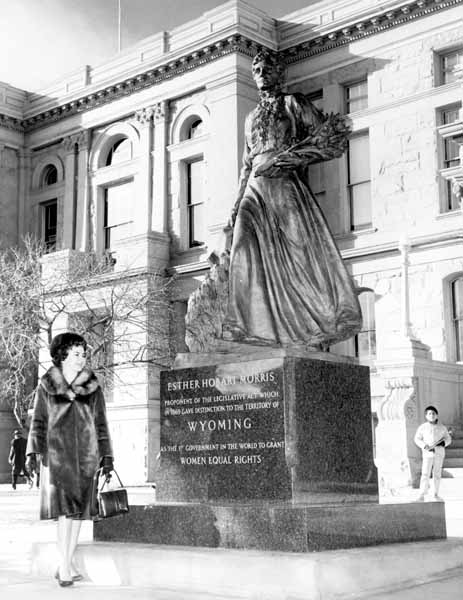
Image Caption: Secretary of State Thyra Thomson admiring the statue of Wyoming suffragist, Esther Hobart Morris, circa 1960s.
(Thyra Thomson papers, Collection Number 9418, American Heritage Center, University of Wyoming)

Monday, September 13, 2010

Pioneering Woman Directors (National Film Preservation Foundation)

Pioneering Woman Directors
This web exhibition from NFPF's Treasures from American Film Archives DVD showcases work by five women filmmakers:
  • Falling Leaves (1912) Preserved by the Library of Congress
  • The Hazards of Helen: Episode 13 (1915) Preserved by the Library of Congress
  • Peyote Queen (1965) Preserved by Anthology Film Archives
  • Rural Life in Maine (ca. 1930) Preserved by Northeast Historic Film
  • Where Are My Children? (1916) Preserved by the Library of Congress
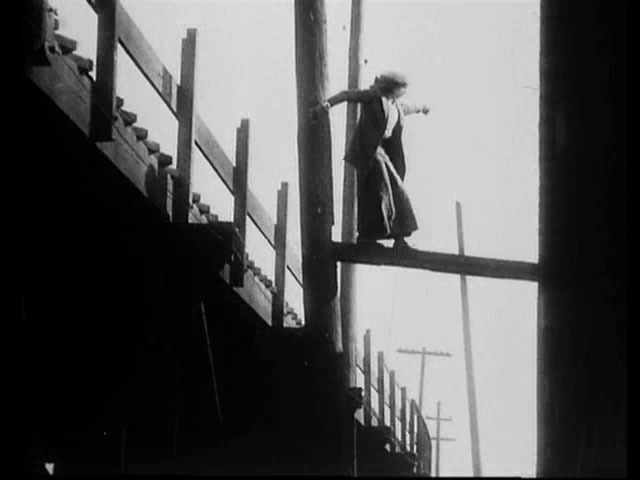
The Hazards of Helen: Episode 13 (1915), directed by Helen Holmes and Leo Maloney.


Wednesday, September 8, 2010

Snapshot: Favorite Objects from the Winterthur Museum

Snapshot: Favorite Objects (Connecticut Humanities Council)
Linda Eaton,  Director of Collections and Senior Curator of Textiles at Winterthur Museum, selects three of her favorite items in Winterthur's collections: an 1815 quilt made by Mary Remington, an indigo-resist printed whole cloth quilt, and needlework pieces from the 19th century. Eaton devotes an entire chapter to Mary Remington and her quilt in Quilts in a Material World: Selections from the Winterthur Collection (New York : Abrams, 2007). Additional chapters in this illustrated volume cover the role of quilts in women's lives, quilts and American textile production, quilts and international trade, quilts and politics, and decorating with quilts in the early twentieth century.


A recent issue of Collector's Weekly features  a lengthy interview with Linda Eaton.

Sunday, September 5, 2010

Quakers and Slavery

The Religious Society of Friends (Quakers) led and sustained the abolitionist movement in Britain and North America, particularly after the Quaker reformation of the eighteenth century. Quaker women provided vital leadership in many of the female anti-slavery societies established in the nineteenth century. For example, Hicksite Quakers Lucretia Mott, Esther Moore, and Lydia White were among the founding members of the Philadelphia Female Anti-Slavery Society in 1833. Historians cite the PFASS as being in the vanguard of the abolitionist movement both for its activism and for its integrated membership.

In November 2010, Swarthmore and Haverford Colleges will join with the McNeil Center of Early American Studies at the University of Pennsylvania to host an international conference on Quakers and Slavery. To support the conference, the Quaker repositories at Swarthmore and Haverford have digitized numerous primary source materials, which are available through Triptych, a searchable online database of special collections from Swarthmore and Haverford as well as Bryn Mawr. Project staff have also developed Quakers and Slavery an online exhibit featuring links to the primary source materials in Triptych as well as commentary by established scholars, Quaker researchers, and project staff. Divided into three helpful categories — Themes, People, and Organizations — the commentary enhances users’ understanding of the primary source materials available through the project.

Several sections focus on the history of Quaker women in the anti-slavery movement:

Radical Quaker Women and the Early Women’s Rights Movement
Learn about radical Quaker women by exploring their role abolition in Pennsylvania and the early Women’s rights movement. Topics discussed include the American Anti-Slavery Society, rural Quaker women, and the first Women’s Rights Convention held at Seneca Falls, New York, 1848.

Rescue of Jane Johnson
In 1855, the slave Jane Johnson and her two children travelled through Philadelphia with their master, John Hill Wheeler. Johnson sent a message to the Pennsylvania Anti-Slavery Society that she wished to escape, and on July 18, Passmore Williamson, William Still, and five other free blacks confronted Wheeler and escorted Johnson and her children to freedom. The event was one of the first challenges to the 1850 Fugitive Slave Law. Passmore Williamson, William Still and the other free blacks were charged for their role in Johnson's 'abduction;' Lucretia and James Mott sheltered Johnson during the trial so that she could testify on her rescuers' behalf.

Biographical entries include a relationship map, which traces relationships among various Quaker supporters of abolitionism including:

Ruth Dugdale and Sarah B. Dugdale
Ruth Dugdale (1801-1896) rivaled her husband, Joseph, in her zeal for reform causes. She was a respected Quaker minister, and participated actively in anti-slavery, temperance, women's rights, and other movements in Ohio, Pennsylvania, and Iowa.

Sarah B. Dugdale (1787-1880) was the mother of Joseph A. Dugdale and the progenitor of his liberal ideals. She was involved in the American Anti-Slavery Society nearly from its founding, continued to participate in Progressive Friends societies and other reform movements until her death in 1880.

Lucretia Mott
Lucretia Coffin Mott (1793-1880)was a prominent Philadelphia Quaker minister and a leader in reform movements, especially antislavery, education, peace, and women's rights.


The site also includes important resources such as a glossary of Quaker terminology (many with links to primary sources explaining those terms), an interactive map, and a timeline of the anti-slavery movement.

Images from Quakers and Slavery.